Frozen Shoulder & Bursitis
Frozen Shoulder: Why It Happens, Why It Hurts & How to Fix It
If you’ve been dealing with shoulder pain that seems to come out of nowhere, gradually worsens, and starts limiting your movement—especially reaching overhead or behind your back—you may be experiencing frozen shoulder.
This is something I’ve been seeing more and more in clinic lately, often alongside other shoulder conditions. The good news is:
With the right approach, it is absolutely treatable.
What Is Frozen Shoulder?
Frozen shoulder (also known as adhesive capsulitis) is a condition where the capsule surrounding the shoulder joint becomes inflamed, thickened, and restricted.
This leads to:
Progressive loss of movement
Deep, aching pain
Pain that can travel down into the bicep
Difficulty with everyday tasks like dressing, lifting, or sleeping
It typically develops in three stages:
Freezing phase – Increasing pain and stiffness
Frozen phase – Less pain, but significant restriction
Thawing phase – Gradual return of movement
Without proper management, this process can last months to years.
Understanding the Shoulder Girdle
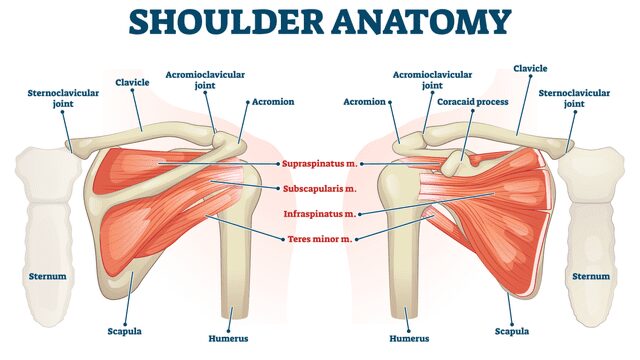
The shoulder is not just one joint—it’s a complex system called the shoulder girdle, made up of:
The glenohumeral joint (main shoulder joint)
The scapula (shoulder blade)
The clavicle (collarbone)
Surrounding muscles, tendons, ligaments, and fascia
For smooth, pain-free movement, all of these structures need to work together.
In frozen shoulder:
The joint capsule tightens and thickens
Surrounding muscles begin to guard and tighten
Movement becomes restricted and painful
This is why treatment needs to address the whole shoulder system—not just one area.
Why Does Frozen Shoulder Occur?
There’s rarely just one cause. Instead, it’s usually a combination of factors:
Previous injury or immobilisation
Poor posture and prolonged sitting
Repetitive strain or overuse
Hormonal changes (common in women aged 40–60)
Metabolic conditions (such as insulin resistance or thyroid dysfunction)
Chronic, low-grade inflammation
Clinically, it often comes down to a combination of:
Inflammation + restriction + protective muscle guarding
Why Is It Often the Non-Dominant Side?
Many people notice this—and it’s not a coincidence.
Your non-dominant arm tends to:
Move less through full range
Be weaker and less coordinated
Carry passive tension rather than active strength
Over time, this creates a perfect environment for:
Stiffness → reduced movement → inflammation → restriction
Why the Pain Travels Down the Arm
The shoulder shares muscular and nerve connections with the upper arm.
When movement is restricted:
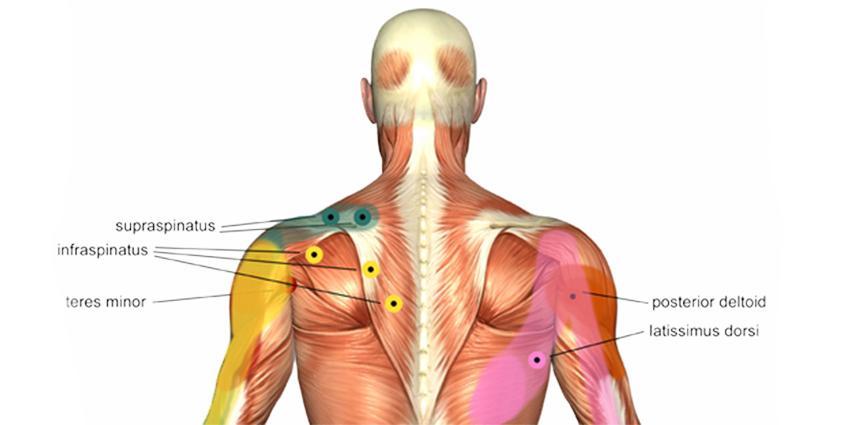
Muscles like the biceps and rotator cuff become overloaded
Trigger points develop
Nerve irritation can occur
This is why pain is often felt:
In the front of the shoulder
Down into the bicep
Occasionally into the forearm
Frozen Shoulder & Bursitis: Why They Often Occur Together
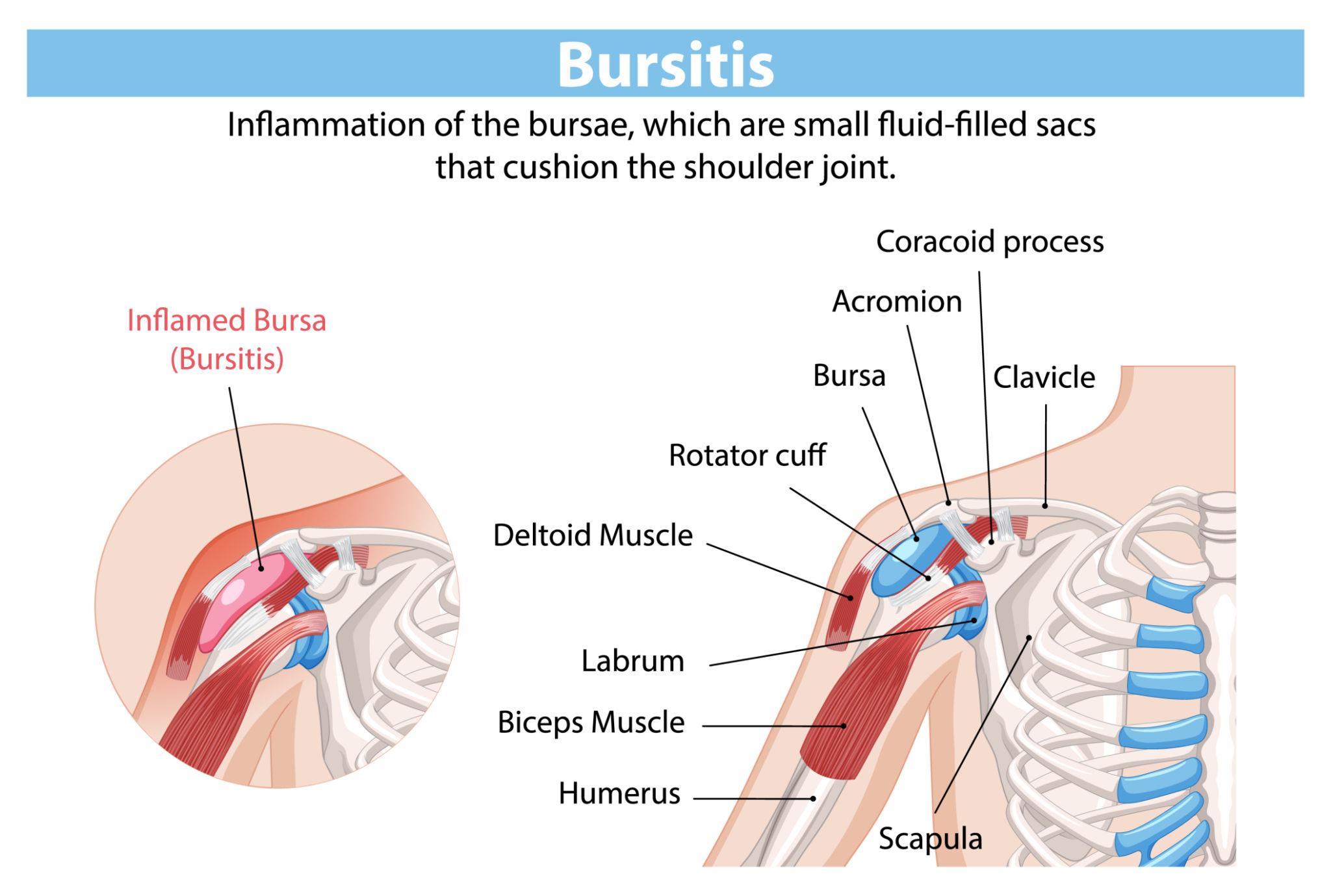
Many people are told they have either frozen shoulder or bursitis—but in reality, they often go hand in hand.
What Is Bursitis?
Bursitis is inflammation of a bursa—a small, fluid-filled sac that reduces friction between tissues.
In the shoulder, the most commonly affected is the subacromial bursa.
When inflamed, it can cause:
Sharp or aching shoulder pain
Pain when lifting the arm
Night pain (especially lying on that side)
Pain radiating into the upper arm
How They Are Connected
These conditions often develop in a cycle:
Pathway 1:
Bursitis causes pain
Movement becomes limited
The shoulder stiffens
Frozen shoulder develops
Pathway 2:
Frozen shoulder restricts movement
Movement patterns change
Structures become compressed
The bursa becomes irritated → bursitis develops
Why This Matters
If you only treat one part of the problem:
The condition often lingers or returns
For best results, you need to address:
Inflammation + movement + muscle function together
Why Resting It Can Make It Worse
It’s completely natural to want to rest a painful shoulder—but in this case, doing nothing can actually make it worse.
When the shoulder isn’t moved:
The capsule stiffens further
Muscles weaken
Circulation decreases
Adhesions develop
The key is:
Gentle, guided movement—not complete rest
Treatment: What Actually Works
Remedial Massage Therapy
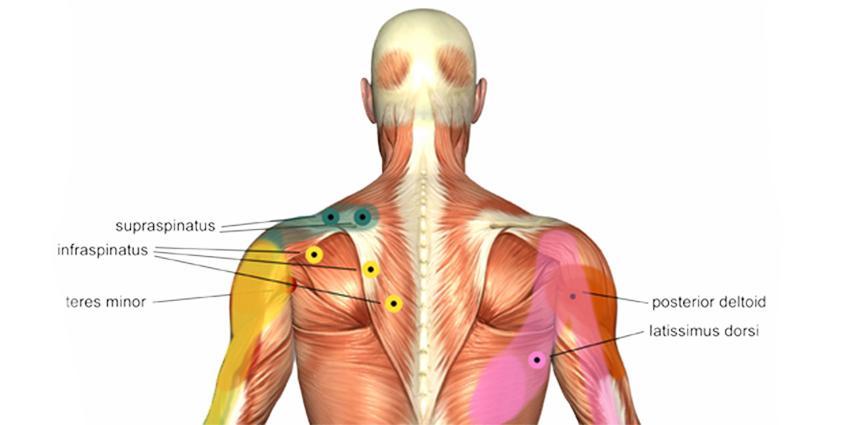
Massage therapy plays a vital role in both frozen shoulder and bursitis.
It helps to:
Reduce muscle tension and protective guarding
Improve blood flow and healing
Decrease inflammation
Restore movement in the shoulder girdle
Address compensation patterns in the neck and upper back
Most importantly, it helps the shoulder move more freely, which is essential for recovery.
Exercise: The Right Kind Matters
Movement is essential—but it needs to be the right type.
Helpful Exercises:
Pendulum swings
Wall walks (front and side)
Assisted shoulder mobility with a stick
Scapular retraction exercises
Gentle rotator cuff strengthening
These help:
Maintain range of motion
Reduce stiffness
Improve joint stability
Exercises That Can Aggravate It:
Heavy overhead pressing
Fast or uncontrolled movements
Deep stretching into pain
High-load resistance too early
The goal is:
Progressive, controlled movement—not pushing through pain
Nutritional Support for Recovery
Supporting the body internally can significantly improve healing.
Key Nutrients:
Omega-3 fatty acids – reduce inflammation
Magnesium – supports muscle relaxation and nerve function
Vitamin C – important for collagen and tissue repair
Vitamin D – supports musculoskeletal health
Zinc – assists with healing and inflammation control
Additional Considerations:
Anti-inflammatory herbs (such as turmeric and ginger)
Blood sugar regulation (important in metabolic cases)
Liver support for inflammation pathways
This is particularly important for clients with:
Hormonal imbalances
Insulin resistance
Chronic inflammation
The Big Picture Approach
Frozen shoulder is not just a local issue—it’s part of a bigger picture.
The most effective approach combines:
Hands-on therapy (massage)
Targeted exercise and movement
Nutritional and internal support
Consistency over time
Final Thoughts
If your shoulder is:
Painful
Stiff
Losing movement
Affecting your day-to-day life
It’s important to act early.
Frozen shoulder and bursitis can be incredibly frustrating, but with the right treatment approach:
Recovery is absolutely achievable.
The key is not to ignore it—and not to stop moving altogether.
Ready to Start Moving Your Shoulder Again?
If you’re dealing with pain, stiffness, or loss of movement in your shoulder, the most important thing you can do is take action early and get the right support around you.
At Lotus Naturopathy & Massage, we take a whole-body, integrated approach to recovery—because frozen shoulder and bursitis aren’t just local issues, they require the right combination of hands-on treatment, movement, and internal support.
Hands-On Treatment to Get You Moving Again
Our massage therapists, Kate and Sara, are highly skilled in treating shoulder conditions.
They focus on:
Releasing tight, protective muscles
Reducing pain and inflammation
Restoring movement through the shoulder girdle
Supporting your body through each stage of recovery
This is often the missing piece that allows the shoulder to finally start improving.
Exercise, Rehabilitation & Nutritional Support
To complement your treatment, working with Michelle ensures you’re not just managing symptoms—you’re actually fixing the problem.
This includes:
Personalised rehab exercises to restore movement and strength
Guidance on what to do (and what to avoid) at each stage
Nutritional and supplement support to reduce inflammation and support healing
A holistic plan tailored specifically to your body
The Best Results Come from the Right Combination
When you combine:
Targeted massage therapy
The right exercises
Internal support through nutrition
You give your body the best possible chance to:
Reduce pain faster, restore movement, and prevent it from coming back
Book Your Shoulder Recovery Plan
If your shoulder is starting to feel tight, painful, or restricted—don’t wait for it to get worse.
Early treatment makes a significant difference.
👉 Book your massage with Kate or Sara
👉 Add a consultation with Michelle for a complete rehab and recovery plan
Your shoulder doesn’t have to stay stuck—
with the right support, it can move freely again.